
- laurenemerlettamikecolbert
-
 Jumat, 24 Januari 2014
 -
 0 Comments


Free Download Intersectional Theology: An Introductory Guide, by Grace Ji-Sun Kim Susan M. Shaw
The writer is really wise to pick words to utilize in making this publication. The selections of words are essential to create a publication. It will certainly be proper to check out by such certain cultures. However one of the advancements of this publication is that this book is actually proper for each culture. You might not hesitate to know nothing after reading this book. Intersectional Theology: An Introductory Guide, By Grace Ji-Sun Kim Susan M. Shaw could aid you to locate several points after analysis.
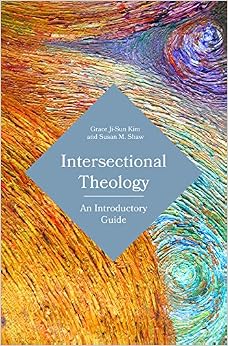
Intersectional Theology: An Introductory Guide, by Grace Ji-Sun Kim Susan M. Shaw

Free Download Intersectional Theology: An Introductory Guide, by Grace Ji-Sun Kim Susan M. Shaw
Ended with your leisure and also have no suggestion how you can do? Obtain the Intersectional Theology: An Introductory Guide, By Grace Ji-Sun Kim Susan M. Shaw and also take it as your reading publication. Why should be reading? Some people will believe that this is an extremely lazy and also uninteresting activity to do. Additionally, several with spare time typically assume that they are free. That's not the time for knowing. Well, reads only for your when learning or examining something? Definitely that's not.
Reading a publication is likewise kind of better solution when you have no adequate loan or time to get your own journey. This is among the reasons we reveal the Intersectional Theology: An Introductory Guide, By Grace Ji-Sun Kim Susan M. Shaw as your friend in spending the moment. For even more representative collections, this publication not just uses it's purposefully book resource. It can be a friend, great friend with much understanding.
We present the book is based on the reasons that will influence you to live far better. Also you have currently the analysis book; you could likewise improve the knowledge by getting them form Intersectional Theology: An Introductory Guide, By Grace Ji-Sun Kim Susan M. Shaw This is actually a type of publication that not just supplies the ideas. The incredible lessons, Experiences, and expertise can be gained. It is why you need to read this book, also web page by web page to the surface.
When his is the time for you to constantly make handle the feature of guide, you could make bargain that the book is actually recommended for you to obtain the most effective suggestion. This is not only ideal ideas to gain the life but likewise to undergo the life. The lifestyle is sometimes adapted the case of excellences, however it will certainly be such thing to do. And also currently, guide is once again suggested right here to review.
About the Author
Grace Ji-Sun Kim is associate professor of theology at Earlham School of Religion in Richmond, Indiana. She is the author or editor of fifteen books, including Mother Daughter Speak (2017) and Embracing the Other (2015). She is a coeditor for the series Asian Christianity in the Diaspora. Kim is an ordained PC (USA) minister and blogs for the Huffington Post, Feminist Studies in Religion, Sojourners, TIME, and The Nation.Susan M. Shaw is professor of Women, Gender, and Sexuality Studies at Oregon State University. She is author of Reflective Faith: A Theological Toolbox for Women (2014) and God Speaks to Us, Too: Southern Baptist Women on Church, Home, and Society (2008) and general editor of the four-volume Women's Lives Around the World: A Global Encyclopedia (2018).
Read more
Product details
Paperback: 170 pages
Publisher: Fortress Press (November 1, 2018)
Language: English
ISBN-10: 1506446094
ISBN-13: 978-1506446097
Product Dimensions:
5.9 x 0.4 x 8.9 inches
Shipping Weight: 8.8 ounces (View shipping rates and policies)
Average Customer Review:
4.0 out of 5 stars
1 customer review
Amazon Best Sellers Rank:
#551,435 in Books (See Top 100 in Books)
Intersectionality as an idea arose out black feminism as black women understood that it was not enough to understand the differentials of power and the effects of oppression that came from being a black, or being a woman. These identities come together to shape people and institutions and the power relations between them. Also, as an analysis that arises on the receiving end of unjust uses of power, it is constantly connecting theory and praxis–reflection and action to pursue justice.In this work, subtitled “An Introductory Guide,†the authors apply this approach to doing theology. They contend that much of the church’s theological scholarship has been done by white, male, Euro-Americans and reflects our social location. Furthermore, some of the theological work that has been done in resistance to this culturally dominant group, like liberation theology, or feminist theology, often is along a single axis of ethnicity, or gender, and is not cognizant of the multiple ways different aspects of identity are shaped by power relations.The authors introduce us to this approach first by giving some of the history that I touched on above of the development of intersectional analysis. They then illustrate intersectionality as it relates to theological ideas with their own narratives.The third chapter then describes what it means to do intersectional theology. One of the key proposals here is that intersectional theology is a “theology of indeterminacy†rather than one that articulates absolute truth claims. Practicing intersectional theology involves “bracketing†our own understanding to enter into the logic of others’ frameworks. It recognizes that theological work is done in a context and asks how our own interpretive community has influenced our interpretations. It forces one to examine whether one is using a single axis of one’s identity and muting others. Oriented toward justice, intersectional theology looks at how a theology either supports or challenges inequities.Chapter four explores reading the Bible intersectionally, and this I found quite helpful. They use the example of the book of Ruth, looking at the different identities of Ruth, the widowed Moabite woman immigrant, Naomi, the bereft Jewish mother unable of her own to assert her inheritance rights with no male offspring, and Boaz, the male, Jewish landowner.Chapter five turns to the practice of intersectionality, both in terms of the pursuit of justice, and fostering the intersectional church. They advocate for a church that is fully intersectional and inclusive along all the axes of identity discussed including age, race, sexual identity and orientation, economic status and more.There is much here that I appreciate. First is the recognition that we do not do our theological work in a vacuum but that it may well reflect one’s various axes of identity. Listening to those who are reading scripture who are not white, not male, not Western has opened my eyes to things in the biblical text to which I’ve been oblivious because of my own social location. Recognizing the complexity of the intersections of race, gender, orientation, and other aspects of our identity and how the mix reflects our experience of power and how we hear scripture, challenges the assumptions I make and my awareness of who “we†are together as the global body of Christ. Learning to “bracket†and incarnationally enter into the lived experience and theological frameworks of others seems crucial to developing the capacity to move beyond our identities to reflect what it means truly to be the body of Christ.At the same time, I do find myself with some questions as I consider this proposal. One has to do with the authors’ comments about Karl Barth (p. 14). They are critical of Barth’s focus on the Bible alone and de-valuing context and social location. Yet it seems that it is precisely Barth’s understanding of the Bible that enables him to forcefully challenge and resist the social location of the Third Reich and the Christian nationalism of the German church in the formulation of the Declaration of Barmen, even though this was the context and social location out of which he theologized.I also wrestle with the language of a “theology of indeterminacy†which sounds like another way of speaking of the “pervasive interpretive pluralism†that Christian Smith has observed in his critique of “biblicist†Protestant Christianity. At times, intersectionality seems to hold out hope for different communities recognizing more truly the manifold revelation of God in Christ, and reflecting that in the mosaic of identities reconciled in Christ. Yet, the question arises of what we do when we have opposing interpretations, even when interpreters from different communities have bracketed, carefully listened, and still at the end of the day differ.I found this a thought-provoking work. While I cannot embrace every conclusion or praxis advanced in this work, it does make me both more reflective about how my own context and various aspects of my identity shape how I read scripture and do theology. It made me want to listen more to voices outside my own social context.
Intersectional Theology: An Introductory Guide, by Grace Ji-Sun Kim Susan M. Shaw PDF
Intersectional Theology: An Introductory Guide, by Grace Ji-Sun Kim Susan M. Shaw EPub
Intersectional Theology: An Introductory Guide, by Grace Ji-Sun Kim Susan M. Shaw Doc
Intersectional Theology: An Introductory Guide, by Grace Ji-Sun Kim Susan M. Shaw iBooks
Intersectional Theology: An Introductory Guide, by Grace Ji-Sun Kim Susan M. Shaw rtf
Intersectional Theology: An Introductory Guide, by Grace Ji-Sun Kim Susan M. Shaw Mobipocket
Intersectional Theology: An Introductory Guide, by Grace Ji-Sun Kim Susan M. Shaw Kindle


0 komentar: